
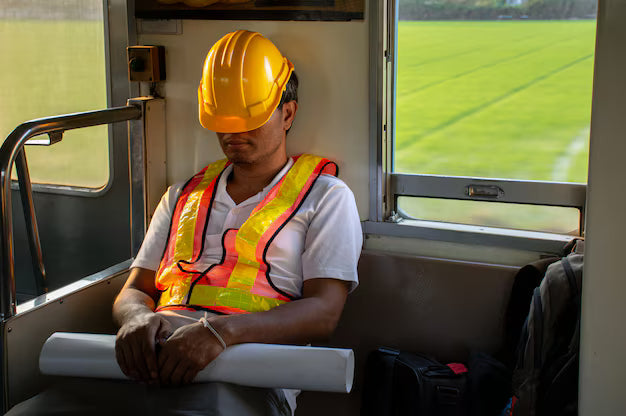
Occupational Health & Sleep: Sleep Apnea Has No Place at Work!
Luc LantagneUntreated obstructive sleep apnea (OSA) poses significant risks to health and safety at work (OHS), primarily due to excessive daytime sleepiness and the cognitive impairments it causes.
Here are the main risks:
1. Accident Risks

- Workplace accidents: People with untreated OSA have a significantly increased risk of workplace accidents (some studies report a two-fold increase in risk).
- Road accidents: Excessive sleepiness is a major factor, considerably increasing the risk of car accidents (often by 2 to 4 times, or even more) on the way to work or during business travel.
2. Decline in Performance and Productivity
 Repeated sleep interruptions lead to poor sleep quality, which in turn affects cognitive function and performance at work:
- Concentration and alertness difficulties: This can lead to errors, mistakes, or impaired judgment, particularly in positions requiring sustained attention or the operation of machinery.
- Memory and learning problems.
- Decreased productivity and efficiency.
- Increased absenteeism (2.5 times more absenteeism) and long-term sick leave.
3. Impact on Overall Health
 OSA is a serious medical condition that increases the risk of developing or worsening other health problems, which indirectly affects the ability to work:
- High blood pressure.
- Cardiovascular diseases (heart attack, stroke, atrial fibrillation).
- Type 2 diabetes.
- Mood disorders such as depression and irritability.
- Chronic fatigue and lack of energy.
 Important point: When sleep apnea is properly diagnosed and treated, particularly with continuous positive airway pressure (CPAP) ventilation, symptoms of sleepiness and the risk of accidents (at work and on the road) are considerably reduced, or even normalized.


